Pocket Billiards · One Pocket

One Pocket: rules, races, and table control.

Use the same table with the correct rule set. This guide separates open competition from handicap competition before walking through the rack, decisions, fouls, practice plan, and tournament paths.
Current as of July 26, 2026Schedules and tour details can change. Confirm entries, rules, and dates with the official organizer before traveling.
Stylized pocket billiards table, cue, and racked balls

Two formats of competition

Open play and handicap play are not the same match.

NON-HANDICAP / OPEN

BCA/CSI and world-rules lane

Use the official OnePocket.org rules with WPA general rules where not superseded. Both players normally go to eight.

HANDICAP / RATED

Local handicap lane; APA is reference only

One Pocket has a long tradition of score spots. Examples include 8–7, 9–7, or 10–6; the stronger player needs more balls or the weaker player needs fewer. Agree on break allocation and score before the first game.

APA does not operate a standard national One Pocket league. Local handicap events use ball-count spots, break spots, or Fargo-informed matches.
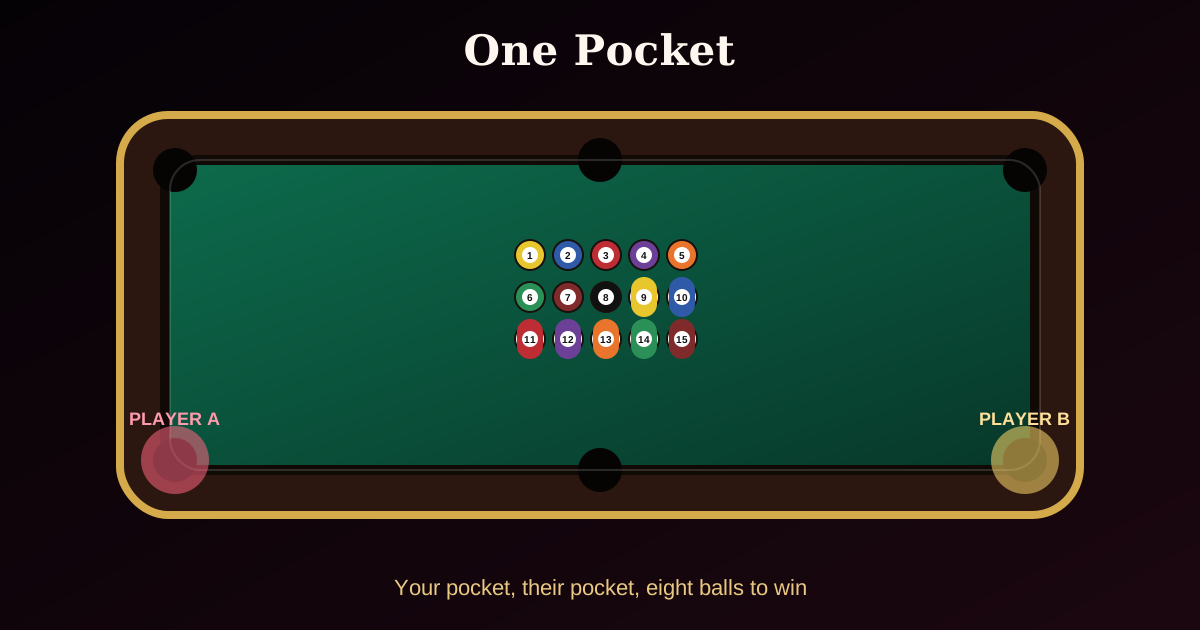
One Pocket table and rack planning diagram
Planning diagram for One Pocket. Always use the event’s published rack and break rules.
ObjectiveScore eight balls into your assigned foot-corner pocket before your opponent scores eight into theirs.
RackAll fifteen balls in a standard triangle. Each player owns one foot-corner pocket; the other four pockets are neutral.
Rules firstEvent guide → sanctioning rules → local bylaws
Best starting habitPlan the next two decisions before shooting.

Step-by-step match flow

Play the rack from start to finish.

  1. Step 1.Lag and select pockets; the breaker’s orientation identifies the chosen pocket.
  2. Step 2.Execute a legal break that moves balls toward your side without selling out the opponent’s pocket.
  3. Step 3.Evaluate offense, defense, and cue-ball risk on every shot.
  4. Step 4.Move balls from the opponent’s side to your side before forcing low-percentage banks.
  5. Step 5.Track owed balls and spot penalties at the correct time.
  6. Step 6.Win by reaching your required score in your pocket.

Rules comparison

Know which rule book controls the table.

Rule laneWhat it controlsOfficial source
OnePocket.orgOfficial One Pocket rules, including handicap scoring.Open rules
WPA general rulesApplies where OnePocket.org rules do not supersede.Open rules

Regional competition by play lane

Find the U.S. or European route that matches the event format.

United States · open

Non-handicap and equal-race routes

  • OnePocket.org event calendar and rules
  • U.S. Open One Pocket and major festival events
  • Regional room-based One Pocket tournaments
Europe · open

Federation and open routes

  • International one-pocket festivals and club opens
  • OnePocket.org and AZBilliards listings
  • Promoter-specific invitational events
United States · rated

Handicap and skill-band routes

  • Ball-count spots such as 8–7 or 9–7
  • Break, pocket, or games-on-the-wire spots
  • All spots agreed before play; APA has no national One Pocket format
Europe · rated

Local handicap and development routes

  • Negotiated ball-count or game spots
  • Local club handicap opens
  • Published promoter rules control; no Europe-wide APA equivalent

Entry rule: verify the player guide. “Open,” “division,” “rated,” and “handicap” are not interchangeable terms, and the event’s published chart controls.

Open the full regional tour directory →

Tours and events

Where this game appears.

  • Derby City Classic One Pocket
  • U.S. Open One Pocket Championship
  • Texas Open One Pocket division
  • Buffalo’s and other major action-room events
  • OnePocket.org members and listed regional events

Professional tour calendar → Regional tour directory →

Practice plan

Build the skill in deliberate practice.

1

Drill 1

Opening-break drill: practice both pocket directions and track opponent sellouts.

2

Drill 2

Three-ball moving drill: relocate balls from the opponent’s side without leaving a shot.

3

Drill 3

End-game drill: practice 3–2, 2–1, and all-balls-up scenarios.

4

Drill 4

Handicap set drill: play to 8–7 or 9–7 and learn score-aware decisions.

Before the lag

Final match checklist.

Confirm the rule set
Confirm handicap or race
Confirm rack and break
Confirm call-shot rules
Confirm jump cue policy
Confirm scorekeeping