Pocket Billiards · 10-Ball

10-Ball: rules, races, and table control.

Use the same table with the correct rule set. This guide separates open competition from handicap competition before walking through the rack, decisions, fouls, practice plan, and tournament paths.
Current as of July 26, 2026Schedules and tour details can change. Confirm entries, rules, and dates with the official organizer before traveling.
Stylized pocket billiards table, cue, and racked balls

Two formats of competition

Open play and handicap play are not the same match.

NON-HANDICAP / OPEN

BCA/CSI and world-rules lane

WPA and Pro Billiard Series 10-Ball is the primary non-handicap reference. It is call-shot rotation with stricter shot declaration and professional break requirements.

HANDICAP / RATED

Local handicap lane; APA is reference only

APA does not operate a standard nationwide 10-Ball league format. Handicap events normally use Fargo-adjusted races, games on the wire, or division caps.

Use APA only as a general skill-level reference if a local operator creates a special 10-Ball event; the local event chart controls.
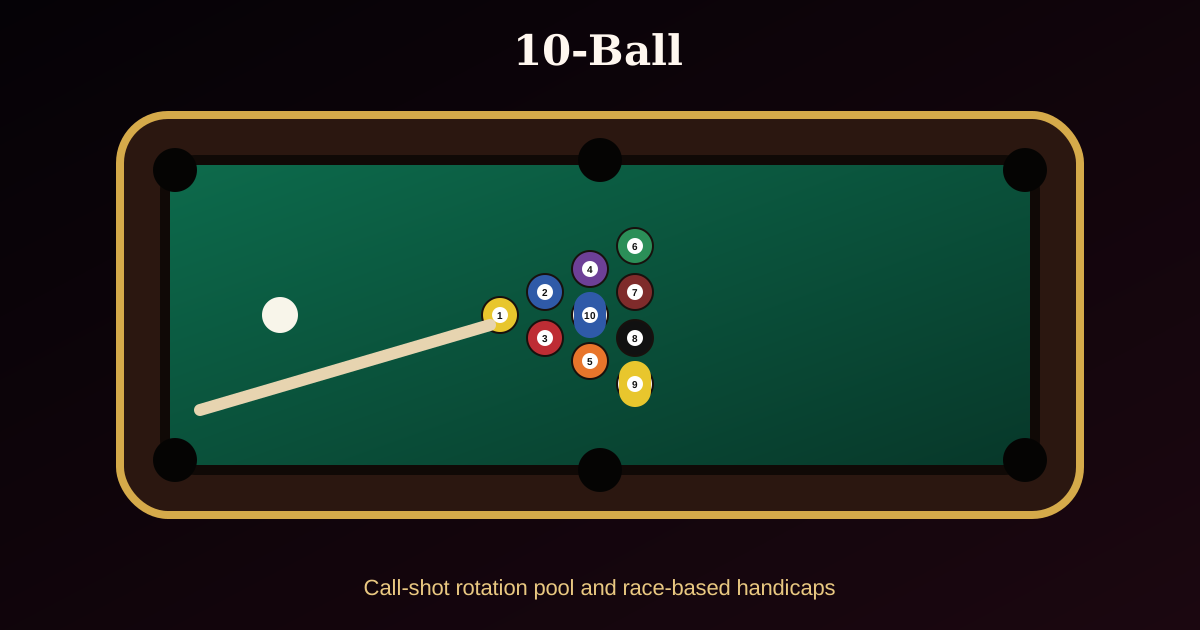
10-Ball table and rack planning diagram
Planning diagram for 10-Ball. Always use the event’s published rack and break rules.
ObjectiveContact the lowest-numbered ball first and win by legally calling and pocketing the 10-ball under the controlling rules.
RackTen balls in a triangle with the 1-ball at the apex and the 10-ball placed according to the event rules, commonly near the center.
Rules firstEvent guide → sanctioning rules → local bylaws
Best starting habitPlan the next two decisions before shooting.

Step-by-step match flow

Play the rack from start to finish.

  1. Step 1.Confirm call-shot, break, 10-on-the-break, safety, and jump-cue rules.
  2. Step 2.Rack tightly and break with control; a legal break matters more than pure speed.
  3. Step 3.Call any non-obvious ball and pocket before the stroke.
  4. Step 4.Plan in three-ball windows and protect the correct angle on transition balls.
  5. Step 5.Use declared safeties and two-way shots when the runout percentage is low.
  6. Step 6.Pocket the called 10 legally or continue through the rack.

Rules comparison

Know which rule book controls the table.

Rule laneWhat it controlsOfficial source
WPA 10-BallOfficial rules baseline.Open rules
Pro Billiard SeriesProfessional 10-Ball events and player guides.Open rules
CSI / BCALocal and national events may use CSI rules and Fargo divisions.Open rules

Regional competition by play lane

Find the U.S. or European route that matches the event format.

United States · open

Non-handicap and equal-race routes

  • Pro Billiard Series U.S. stops
  • Texas Open and CSI 10-Ball events
  • National and regional open 10-Ball championships
Europe · open

Federation and open routes

  • EPBF European 10-Ball Championship
  • EuroTour 10-Ball stops when scheduled
  • National federation 10-Ball opens
United States · rated

Handicap and skill-band routes

  • USA Pool League and CSI/Fargo-based 10-Ball
  • Local games-on-the-wire or rating-chart events
  • APA skill levels may be referenced locally, but APA has no standard national 10-Ball format
Europe · rated

Local handicap and development routes

  • Local Fargo/Elo or race-spot tournaments
  • Ability-separated divisions
  • Published local chart controls; no Europe-wide APA 10-Ball system

Entry rule: verify the player guide. “Open,” “division,” “rated,” and “handicap” are not interchangeable terms, and the event’s published chart controls.

Open the full regional tour directory →

Tours and events

Where this game appears.

  • Pro Billiard Series men’s and women’s opens
  • Qatar World Cup 10-Ball
  • WPA Teams 10-Ball World Championship
  • Texas Open 10-Ball Championships
  • EPBF European Championships and EuroTour 10-Ball stops

Professional tour calendar → Regional tour directory →

Practice plan

Build the skill in deliberate practice.

1

Drill 1

Call-shot discipline drill: verbalize every non-obvious ball and pocket.

2

Drill 2

Break-control drill: score cue-ball control, legal-break success, and first-shot quality.

3

Drill 3

Ten-ball transition drill: practice the 7–8–9–10 end pattern from varied layouts.

4

Drill 4

Fargo race simulation: play short sets with race spots and track performance under pressure.

Before the lag

Final match checklist.

Confirm the rule set
Confirm handicap or race
Confirm rack and break
Confirm call-shot rules
Confirm jump cue policy
Confirm scorekeeping