WoW Healer Build Guide: Master Midnight and Prepare for The Last Titan
Build a stronger World of Warcraft healer with proactive cooldown planning, separate raid and Mythic+ profiles, better mana control, a cleaner interface, and coordinated team progression.
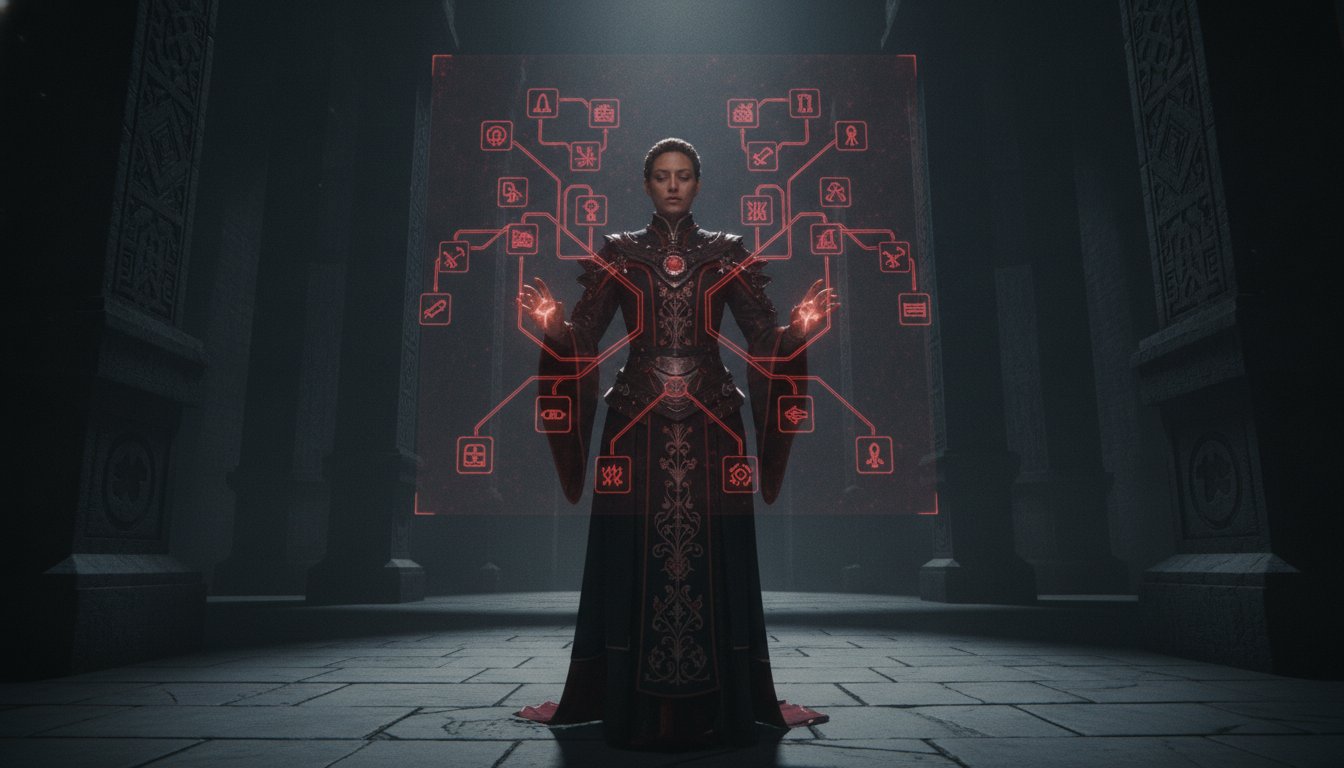
Editor’s Note: This guide focuses on World of Warcraft: Midnight and the transferable healing fundamentals players can carry forward into The Last Titan. Talent tuning, stat priorities, set bonuses, trinkets, and encounter demands change throughout a season. Confirm current recommendations for your specific specialization before importing or copying a build.
A perfect talent tree will not save a fractured group.
You can copy a top-ranked build and still watch your mana bar disappear while the tank falls over. You can chase peak healing numbers and still lose the pull because a defensive cooldown was used too late, a dangerous cast went uninterrupted, or two healers committed their largest abilities to the same damage event.
A strong healer does more than fill health bars.
The healer studies damage patterns, prepares for dangerous mechanics, manages limited resources, contributes utility, and gives the group a stable foundation. Your build supports that work, but it cannot replace awareness, communication, or execution.
This WoW healer build guide is designed to help you move beyond blindly copying talent strings. It provides a framework for choosing talents, creating separate raid and Mythic+ profiles, managing mana, improving your interface, reviewing your performance, and progressing with a coordinated team.
The objective is not to become a meter-chasing healer.
The objective is to become the person your group can depend on when the encounter becomes difficult.
Key Takeaways
- Prepare for incoming damage instead of waiting for health bars to collapse.
- Maintain separate talent profiles for raids and Mythic+ dungeons.
- Choose talents according to the encounter, group composition, and damage pattern.
- Treat interrupts, dispels, crowd control, and defensive abilities as part of your healing toolkit.
- Do not assume every healer specialization has the same secondary-stat priority.
- Build an interface that presents important information without hiding the battlefield.
- Review logs for cooldown timing, deaths, mana use, overhealing, utility, and downtime.
- Prioritize consistency, communication, and team survival over one impressive healing-meter result.
Table of Contents
- The Modern Healer’s Mandate
- Proactive Healing and Damage Planning
- Building Your Talent Architecture
- Raid Healing Versus Mythic+ Healing
- Stats, Gear, and Mana Efficiency
- Building an Effective Healer Interface
- Reviewing Logs and Improving Performance
- The Syndicate Standard for Healers
- A Four-Week Healer Improvement Plan
- Final Briefing
- Frequently Asked Questions
The Modern Healer’s Mandate
The old idea of healing as a constant game of reacting to missing health is incomplete.
Reactive healing remains necessary. Unexpected mistakes happen, players stand in avoidable damage, and mechanics sometimes overlap in ways the group did not anticipate. A healer must be capable of responding quickly when the plan breaks down.
However, high-level healing begins before the damage lands.
Most major raid mechanics and dangerous dungeon abilities are predictable. Boss timers, enemy cast bars, route planning, and previous attempts tell you when the group is about to take damage.
That information gives you time to prepare.
Depending on your specialization, preparation may include:
- Applying healing-over-time effects
- Building absorb shields
- Activating a damage-reduction ability
- Beginning a healing ramp
- Positioning for an upcoming movement phase
- Saving an instant-cast ability
- Applying an external defensive to the tank
- Coordinating a raid-wide cooldown
- Conserving mana for a later phase
- Using crowd control or an interrupt to prevent damage entirely
The strongest healers are not simply fast. They understand what is about to happen and select the correct response before the group reaches a crisis point.
Proactive Healing and Damage Planning
Every difficult encounter has a damage timeline.
Some mechanics produce a single heavy hit. Others apply sustained damage over several seconds. Some threaten the entire raid, while others target a tank, a small group, or one vulnerable player.
Your first responsibility is to identify the damage profile.
Before a raid boss or challenging Mythic+ pull, ask four questions:
1. What Can Kill the Group?
Identify the mechanics capable of creating immediate deaths or overwhelming damage.
These are the moments that require major healing cooldowns, defensives, health consumables, movement planning, or encounter-specific talent changes.
2. What Damage Is Preventable?
Not every health loss should be solved with more healing.
An interrupt, stun, dispel, knockback, line-of-sight strategy, personal defensive, or correct movement may prevent the damage from occurring.
Healing avoidable damage repeatedly is one of the fastest ways to waste mana and lose control of a pull.
3. Which Cooldown Covers Each Event?
Do not wait until the boss is casting to decide which healer should respond.
For organized content, map major cooldowns to specific mechanics. Avoid using several large abilities on the same event unless the damage requires that level of coverage.
A healing cooldown used without a plan may leave the group defenseless thirty seconds later.
4. What Must Be Saved for the Final Phase?
Long encounters often become more dangerous near the end.
A healer who spends every major cooldown and most of their mana during the opening minutes may have nothing available when the group reaches the decisive phase.
The goal is not to finish every early damage event at full health immediately. The goal is to keep the group safe while preserving enough resources to complete the encounter.
Building Your Talent Architecture
A healer build should be treated as a working loadout, not a permanent answer.
Your talent tree normally includes three broad categories of choices:
- Foundational throughput
- Resource management and survivability
- Encounter-specific utility or specialization
The strongest build is the one that supports the content directly in front of you.
Start With the Foundation
Your foundational talents should provide the basic tools your specialization needs to function.
These may improve:
- Core healing spells
- Area-of-effect healing
- Single-target emergency healing
- Mana recovery
- Cooldown availability
- Healing-over-time effects
- Absorb effects
- Personal survivability
- Mobility
- Defensive utility
A popular talent is not automatically mandatory for every situation. Its value depends on whether it contributes meaningfully to the encounter.
A talent that produces excellent healing in a stacked raid may perform poorly in a dungeon where players are spread out. A talent that excels during sustained damage may be less useful against short, violent bursts.
Evaluate what the talent does—not merely where it appears on a ranking page.
Evaluate Hero and Apex Talent Choices
Hero and Apex Talent choices can significantly change how a healer delivers throughput, damage, utility, or defensive support.
Do not assume one path is universally correct.
Evaluate each option according to:
- The frequency of incoming damage
- Whether the damage is sustained or burst-based
- The amount of movement required
- The number of players being healed
- The availability of other group defensives
- Your mana requirements
- Your need for personal survivability
- The amount of safe damage-dealing time
- Your group’s overall composition
One choice may improve a planned healing ramp. Another may strengthen frequent smaller heals. A third may provide utility that prevents more damage than an additional throughput talent could restore.
The correct question is not, “What talent did the highest-ranked player use?”
The better question is, “Why did that player use it, and do the same conditions apply to my group?”
Identify Your Flex Points
Most builds contain several talents that can be changed without destroying the specialization’s core function.
Those are your flex points.
Create and label several saved profiles, such as:
- Raid — Sustained Group Damage
- Raid — Heavy Burst Damage
- Raid — Tank Support
- Mythic+ — General Route
- Mythic+ — Dispel or Utility Focus
- Mythic+ — High Burst Healing
- Mythic+ — Offensive Contribution
- Learning or Progression Build
Clear names make it easier to select the correct profile before the event starts.
Do not discover halfway through a boss attempt that you entered with the wrong dispel, defensive, or crowd-control talent.
Raid Healing Versus Mythic+ Healing
One healer build should not be expected to perform every job equally well.
Raids and Mythic+ dungeons place different demands on a healer.
| Priority | Raid Healing | Mythic+ Healing |
|---|---|---|
| Group size | Larger raid group | Five-player party |
| Damage pattern | Planned raid-wide events | Rapid burst and pull-by-pull variation |
| Cooldowns | Coordinated with other healers | Often managed independently |
| Utility | Encounter assignments and raid defensives | Interrupts, stops, dispels, and route utility |
| Mana | Long-form resource planning | Pull-to-pull recovery and efficiency |
| Damage contribution | Useful during safe windows | Often important for completing the timer |
| Talent focus | Sustained group coverage | Burst healing, utility, mobility, and control |
The Raid Build
Raid healing is a coordinated assignment.
Several healers may be covering the same group, so success depends on avoiding unnecessary overlap. Two healers using their largest cooldowns simultaneously can create enormous overhealing and leave the group exposed during the next mechanic.
Raid builds often benefit from talents that support:
- Sustained area healing
- Planned healing ramps
- Raid-wide defensive coverage
- Efficient healing over longer encounters
- Movement while casting or maintaining effects
- Tank externals
- Encounter-specific dispels
- Cooldown reduction
- Mana efficiency
Communication with the other healers is essential.
Know which mechanics belong to you. Know when another healer is covering the group. Know when to hold your cooldown rather than competing for the highest number on the meter.
The raid succeeds when the healing team functions as one unit.
The Mythic+ Build
A Mythic+ healer works in a smaller group where every ability can have a direct effect on the timer.
Your responsibilities may include:
- Emergency single-target healing
- Group burst recovery
- Tank support
- Interrupting dangerous casts
- Dispelling harmful effects
- Removing enemy buffs
- Stunning or controlling enemies
- Contributing damage
- Using personal defensives
- Helping the group recover between pulls
- Adjusting to affixes, routes, and dungeon-specific mechanics
An interrupt or crowd-control ability can be one of the most effective healing tools available because it prevents the incoming damage instead of forcing you to repair it afterward.
Damage contribution also matters, but only after the group’s immediate survival requirements are secured.
Do not sacrifice a player to finish one more damage cast. At the same time, do not stand idle when no healing is required.
Efficient Mythic+ healing means knowing when to heal, when to control an enemy, and when to help end the pull faster.
Stats, Gear, and Mana Efficiency
There is no universal secondary-stat priority that applies to every healer.
Haste may improve cast speed, cooldown flow, resource generation, or healing-over-time effects for one specialization. Mastery may provide exceptional value for another. Critical Strike and Versatility may become stronger depending on the build, encounter, gear level, and specialization mechanics.
Treat any generic stat list cautiously.
Consider:
- Your specialization’s current mechanics
- Your selected talent profile
- Your set bonuses
- Your trinkets
- Your current item level
- The content you primarily play
- Whether you need more throughput, speed, efficiency, or survivability
A lower-item-level piece is not automatically better because it contains the secondary stats listed in a guide. Evaluate the complete item and how it fits your current setup.
Consumables and Enchants
Consumables and enchants will not repair poor positioning or missed mechanics, but they can improve a properly executed build.
Before organized progression, check:
- Weapon enchant
- Ring enchants
- Appropriate flask
- Food
- Healing and mana potions
- Health potions
- Runes or other applicable consumables
- Repair status
- Talent profile
- Gear durability
Preparation prevents the group from losing time between attempts.
Mana Is a Strategic Reserve
Your mana bar is not simply a resource to empty as quickly as possible.
Watch how much mana remains at important points in the encounter.
If you repeatedly run dry before the final phase, investigate:
- Excessive overhealing
- Inefficient spell choices
- Unnecessary emergency casts
- Poor cooldown use
- Healing avoidable damage
- Missing mana-regeneration opportunities
- Incorrect talent choices
- Weak coordination with the other healers
Finishing a fight with some mana remaining is not automatically a failure. Spending every point of mana is not automatically good play.
The correct result is using enough mana to keep the group safe through the end of the encounter.
Building an Effective Healer Interface
A strong build provides potential. Your interface determines how effectively you can use it.
Your HUD should help you answer important questions immediately:
- Who is in danger?
- Which player has a dispellable effect?
- When is the next major damage event?
- Is the tank using a defensive?
- Which healing cooldowns are available?
- Which group defensives have already been used?
- How much mana remains?
- Which enemies are casting dangerous abilities?
- Am I standing in a mechanic?
Raid Frames
Use raid frames that clearly display:
- Current health
- Incoming absorbs
- Your healing-over-time effects
- Important encounter debuffs
- Dispellable effects
- Range
- Player role
- Dead or disconnected players
The default interface may be sufficient for some players. Others prefer an addon such as Grid2 or VuhDo.
The correct option is the one that gives you accurate information without covering too much of the screen.
Mouseover and Click Casting
Mouseover macros or click-casting systems can reduce the number of steps required to heal a target.
That can be valuable when several players need attention quickly.
However, a complicated binding system is not automatically better. Choose a setup you can execute reliably. Keep similar abilities grouped logically and avoid changing every keybind immediately before progression.
Build muscle memory during lower-pressure content before relying on the setup in a difficult raid or high key.
WeakAuras and Encounter Alerts
WeakAuras and encounter tools can help track:
- Important talent effects
- Major healing cooldowns
- Tank defensives
- Group defensive availability
- Encounter timers
- Dispel assignments
- Interrupt rotations
- Mana thresholds
- Trinket effects
Use alerts selectively.
A screen filled with flashing icons, sound effects, and overlapping warnings can make important information harder to identify. Every element should answer a specific gameplay question.
If an alert does not help you make a decision, remove it.
Reviewing Logs and Improving Performance
Healing meters show only part of the story.
High HPS can come from excellent execution, but it can also come from excessive avoidable damage, poor cooldown coordination, or competing with other healers for the same health deficits.
Use logs to investigate the complete pull.
Review:
- Cause and timing of player deaths
- Major cooldown usage
- Cooldown overlap
- Mana remaining at key phases
- Overhealing
- Healing targets
- Dispel timing
- Interrupts and crowd control
- Personal defensive usage
- Avoidable damage taken
- Damage contribution
- Periods of inactivity
- Positioning problems
- Differences between successful and failed attempts
Logs provide evidence, but they still require context.
A healer may show lower HPS because another healer covered most of the assigned damage. A player may have died because they missed a personal defensive, moved out of range, or failed a mechanic that could not reasonably be healed.
Do not use logs merely to assign blame.
Use them to identify one or two specific improvements for the next event.
The Syndicate Standard for Healers
Within The Syndicate, a healer is a tactical anchor for the group.
We value peak performance, but one impressive meter result does not matter if it cannot be repeated. Reliability, preparation, communication, and sound decision-making are more valuable than chasing numbers at the expense of the team.
A dependable healer:
- Arrives prepared
- Understands the encounter plan
- Communicates cooldown availability
- Uses personal defensives
- Responds constructively to feedback
- Reviews mistakes without attacking other players
- Helps newer members understand their role
- Adapts talents when the encounter changes
- Protects the group rather than the meter
Experienced Players Teach Developing Healers
The Syndicate is a dedicated guild family.
Experienced healers help beginners, returning players, and members learning a new specialization. Coaching may include:
- Reviewing talent choices
- Discussing spell priority
- Building a functional interface
- Explaining healing ramps
- Planning cooldowns
- Reviewing logs
- Practicing dungeon mechanics
- Improving mana management
- Preparing a healer toon for raids or Mythic+
The objective is not to make a developing player dependent on someone else.
The objective is to help that player understand the role, make informed decisions, and eventually pass that knowledge to another guildmate.
Organized Events and Fair Participation
Guild raids, dungeon groups, learning events, and gearing activities are placed on organized days and times whenever possible.
Members can review the schedule, sign up, and prepare their characters before the event.
Participation depends on:
- Available group size
- Role balance
- Character readiness
- Encounter requirements
- Sign-up order or roster policy
- Attendance
- Team needs
No one purchases a raid position.
Membership in The Syndicate is free. There are no dues, subscriptions, paid ranks, or premium membership tiers.
When the game permits eligible loot to be traded and the recipient does not need the item, members are encouraged to offer it to a guildmate who can use the upgrade.
The goal is to make the whole group stronger.
Streams, Reviews, and Community Growth
Selected Syndicate raids, Mythic+ runs, learning events, and progression nights may be streamed or recorded.
These streams capture:
- Skilled gameplay
- Raid-leader explanations
- Healing decisions
- Successful recoveries
- Learning moments
- First kills
- Unexpected wipes
- Guild celebrations
- The fun banter between members
Archived footage can also help healers review positioning, cooldown timing, mechanics, and decision-making.
Streaming gives us a way to share knowledge, preserve memorable guild moments, recognize our members, and grow The Syndicate’s audience.
A Four-Week Healer Improvement Plan
Week One: Build the Foundation
- Confirm your core talent profile.
- Create a clean raid-frame layout.
- Set comfortable healing keybinds.
- Track your major cooldowns and mana.
- Practice your basic spell priority.
- Complete lower-pressure content to build muscle memory.
Week Two: Create Separate Profiles
- Save at least one raid build.
- Save at least one Mythic+ build.
- Identify your flex talents.
- Add encounter-specific dispels or utility.
- Review where each major cooldown provides the most value.
Week Three: Review Your Execution
- Record or log several events.
- Review player deaths.
- Check your cooldown timing.
- Examine overhealing and mana use.
- Identify unnecessary periods of inactivity.
- Choose one clear improvement goal.
Week Four: Integrate With the Team
- Coordinate cooldowns with other healers.
- Discuss interrupts and stops with the dungeon group.
- Ask an experienced healer to review one pull.
- Practice communicating before dangerous mechanics.
- Help another developing player with something you have learned.
Improvement becomes sustainable when knowledge moves through the entire guild.
Final Briefing
A healer build is a blueprint.
Your preparation, awareness, interface, resource management, and teamwork turn that blueprint into a successful pull.
Build for the damage profile. Save separate raid and Mythic+ loadouts. Review your logs in context. Contribute utility and damage when it is safe. Coordinate with the people beside you.
Most importantly, become consistent.
The strongest healer is not always the person who produces the largest number. It is the person who understands the encounter, protects the group, communicates clearly, and performs dependably from one attempt to the next.
Those fundamentals matter in Midnight, and they will remain valuable as the Worldsoul Saga moves toward The Last Titan.
Join The Syndicate
You do not need to learn every part of healing alone.
The Syndicate brings experienced and developing players together for organized raids, Mythic+ groups, gearing activities, character progression, mentoring, and streamed guild events.
Membership is completely free. There are no dues, paid tiers, subscriptions, or premium ranks.
Bring a positive attitude, a willingness to improve, and a commitment to supporting the group.
Protect the team. Learn from every pull. Progress together.
Frequently Asked Questions
What is the best healer specialization in WoW right now?
There is no permanent best healer for every player and every form of content.
Performance changes with tuning, encounter design, group composition, talent selection, and player execution. A specialization that excels in a coordinated raid may not provide the utility your Mythic+ group needs.
Choose a healer you can execute confidently and that supports the needs of your regular group.
Do I need different healer builds for raids and Mythic+?
Yes.
Raid healing usually emphasizes sustained group coverage, cooldown coordination, mana planning, and larger-scale mechanics.
Mythic+ healing generally requires stronger burst response, utility, interrupts, dispels, personal survivability, mobility, and safe damage contribution.
Save separate profiles and adjust the flex talents for individual encounters.
How should I choose between Hero or Apex Talent options?
Start with the damage profile.
For frequent predictable damage, consider talents that improve sustained healing or shorten important cooldowns. For isolated burst events, prioritize options that strengthen emergency response or defensive coverage.
Also consider movement, mana requirements, group composition, and the utility already provided by other players.
Is Haste or Mastery the best stat for healers?
It depends on the specialization, build, gear, and content.
Haste may improve cast speed, global-cooldown flow, healing-over-time effects, or resource generation. Mastery has a different effect for every specialization.
Do not apply one universal secondary-stat ranking to every healer. Review current information for your specialization and evaluate the complete item rather than one stat in isolation.
How much damage should a healer contribute?
Contribute damage when the group is stable and no immediate healing responsibility requires your attention.
Damage can shorten a pull and reduce the total amount of healing required. However, losing a player because you prioritized one more offensive cast is rarely worthwhile.
Survival comes first. Efficient use of safe downtime comes second.
Are healer addons mandatory?
No individual addon is mandatory.
A healer needs clear raid frames, useful debuff information, accessible keybinds, encounter timers, and cooldown awareness. Some players accomplish that with the default interface. Others use tools such as WeakAuras, Grid2, or VuhDo.
Use the setup that provides the information you need without overwhelming your screen.
How can I improve my mana management?
Review which spells consume the most mana and whether they are producing meaningful healing.
Check for overhealing, unnecessary emergency casts, weak cooldown timing, and avoidable damage. Coordinate with the other healers so several large abilities are not wasted on the same event.
Treat mana as a resource that must last through the encounter’s final dangerous phase.
What should I examine first in a healing log?
Start with deaths rather than total HPS.
Determine what killed the player, whether the damage was avoidable, what cooldowns were available, and whether the player was in range.
Then review cooldown timing, overhealing, mana, dispels, personal defensives, damage taken, utility use, and inactive periods.
Can a beginner or returning healer join The Syndicate?
Yes.
We welcome players who are willing to learn, communicate, prepare, and treat others respectfully. Experienced members help developing healers understand talent choices, mechanics, cooldowns, interfaces, mana management, and group responsibilities.
Character level and equipment can be improved. A cooperative mindset is the more important starting point.
Does it cost money to join The Syndicate?
No.
The Syndicate does not charge membership fees, dues, subscriptions, or premium-tier costs. Guild participation and shared community resources are free.
Members contribute through preparation, teamwork, reliability, respectful conduct, teaching, and participation—not payment.
Does joining guarantee a raid or Mythic+ position?
No specific event position is guaranteed.
Groups depend on available roles, group size, character readiness, encounter requirements, attendance, sign-ups, and team composition.
Guild leadership works to provide fair opportunities while protecting the experience and time of the complete group.