Why Players Still Prefer WOTLK Over Other WoW Expansions
Wrath of the Lich King remains one of World of Warcraft's most loved eras. Here is why so many players still choose WOTLK over other expansions.
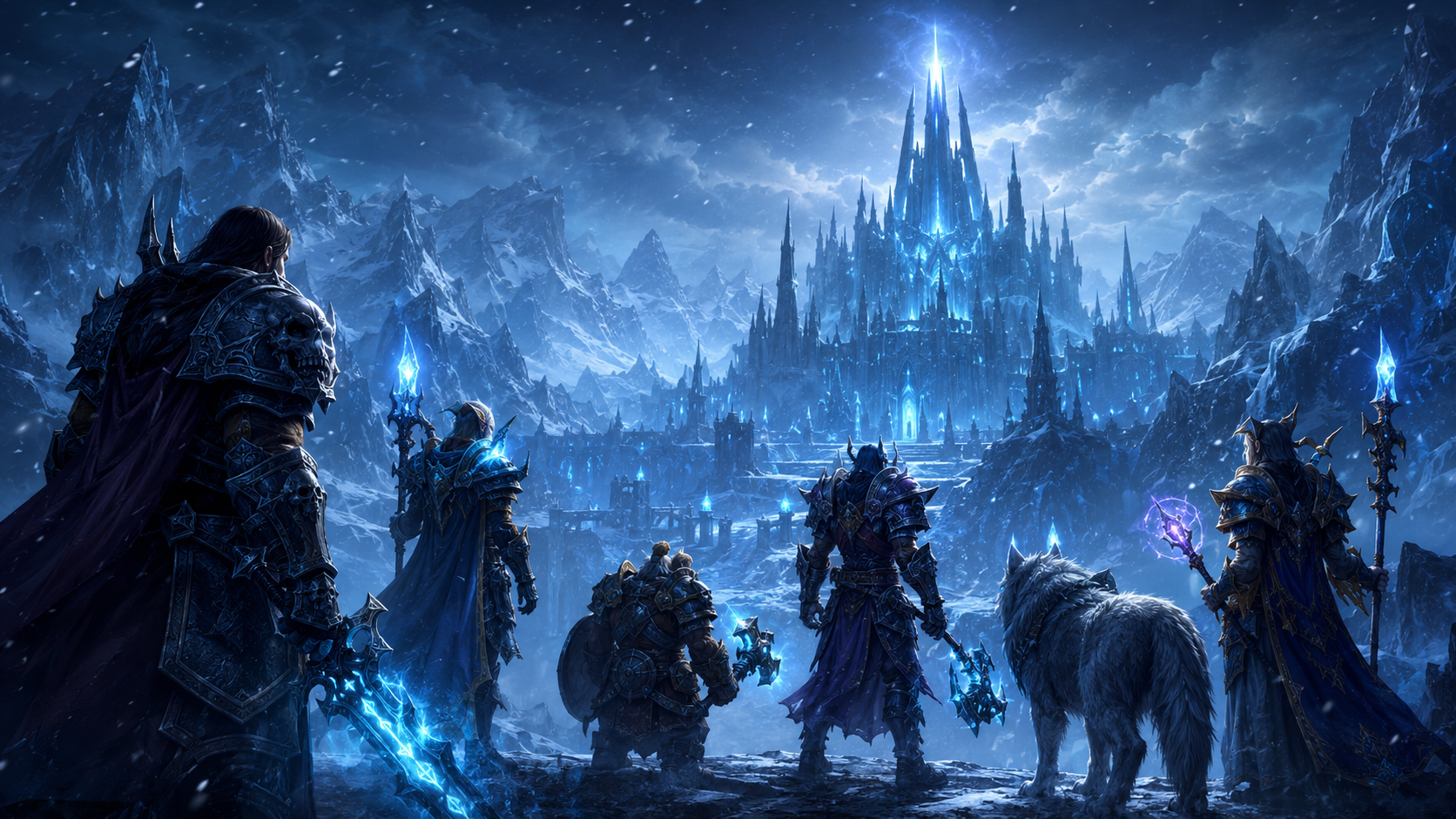
Ask a room full of World of Warcraft players which expansion was the best, and one answer comes up again and again: Wrath of the Lich King.
Not every player agrees, of course. Some prefer the danger and simplicity of Vanilla. Some love The Burning Crusade. Some argue that Legion, Mists of Pandaria, or Dragonflight had better class design, better systems, or better endgame variety. But WOTLK has a rare kind of staying power. Years later, players still return to it through Classic, private servers, guild communities, and nostalgia-driven progression projects.
So why does Wrath of the Lich King remain so popular? The answer is not just nostalgia. WOTLK hit a balance that many players feel later expansions moved away from: strong story, memorable raids, satisfying class identity, clear gearing, social gameplay, and enough convenience without making the game feel disposable.
WOTLK was the bridge between old-school and modern WoW
Wrath of the Lich King sits in a special place in WoW history.
Vanilla WoW was massive, mysterious, slow, and social, but it could also be rough around the edges. The Burning Crusade added better endgame structure, arenas, heroic dungeons, and more serious raid progression, but it still had sharp barriers for casual players and smaller guilds.
WOTLK found the middle ground.
It kept the RPG feel of older WoW while making the game smoother. Leveling was still a journey, but it flowed better. Dungeons still mattered, but they were more accessible. Raids still required teamwork, but more players could experience them through 10-player and 25-player formats. Classes still had talent trees and identity, but more specs were viable than in earlier eras.
That middle-ground design is one of the biggest reasons players keep coming back. WOTLK feels polished without feeling overdesigned.
The story had a villain everyone cared about
A major reason Wrath worked so well was Arthas.
The Lich King was not just another raid boss added at the end of an expansion. Players knew him from Warcraft III. They had seen Arthas fall from prince to death knight to Lich King. By the time players reached Northrend, the story already had weight.
That gave the entire expansion a clear purpose. You were not just leveling through random zones. You were marching toward Icecrown. Every major story beat felt connected to the final confrontation.
Dragonblight gave players the Wrathgate. Icecrown showed the full power of the Scourge. Storm Peaks explored Titan history. Zul'Drak showed a kingdom collapsing under desperation. Even when players were doing normal quests, the expansion felt like it was building toward something.
That is something many players feel later expansions sometimes struggled with. WOTLK had a simple, powerful fantasy: go north, fight the Scourge, and eventually face the Lich King.
Northrend felt like a complete continent
Northrend remains one of Blizzard's strongest expansion continents because every zone had a distinct identity.
Howling Fjord had cliffs, vrykul, longboats, and cold northern atmosphere. Borean Tundra felt like a brutal military landing zone. Dragonblight carried major lore weight. Grizzly Hills gave players one of the most beloved zones and soundtracks in the game. Sholazar Basin broke up the ice and snow with a jungle zone. Storm Peaks leaned into Titan mystery. Icecrown felt like enemy territory from the moment you arrived.
That variety mattered. Northrend was not one repeated visual theme. It was a full campaign map with different cultures, threats, moods, and quest lines.
Players remember where they were in Wrath. They remember Dalaran floating over Crystalsong Forest. They remember the music in Grizzly Hills. They remember the first time they rode toward Icecrown Citadel. That kind of world identity is one of WOTLK's strongest advantages.
Class design felt powerful without being bloated
Wrath class design is one of the most debated parts of the expansion, but it is also one of the reasons many players love it.
Classes felt stronger than they did in Vanilla or TBC. Many specs that were awkward or limited in earlier eras became more useful. Tanks had better tools. Healers had stronger kits. DPS rotations became more active. Hybrid classes felt more complete. Death Knights arrived as WoW's first hero class and immediately gave the expansion a unique identity.
At the same time, classes were not overloaded with too many temporary systems. You had your talents, glyphs, gear, professions, enchants, gems, and rotation. That was enough to create depth without making the character feel buried under layers of expansion-only mechanics.
For many players, that is the sweet spot. WOTLK classes had buttons to press, cooldowns to manage, and meaningful build choices, but they still felt readable.
Gearing made sense
One of the biggest reasons players prefer WOTLK is that gearing feels understandable.
You run dungeons. You earn reputation. You craft pieces. You buy emblem gear. You raid for tier sets, weapons, trinkets, and best-in-slot upgrades. You improve your character one step at a time.
That structure gives players a clear path.
Fresh level 80 characters can start with normal dungeons, heroic dungeons, reputation rewards, crafted gear, and early raid content. More serious players can push into Ulduar, Trial of the Crusader, Icecrown Citadel, heroic modes, achievements, and hard-mode loot.
The game gives you goals without making every system feel mandatory forever. You can log in, decide what upgrade you want, and work toward it.
That is a major contrast with expansions where players felt pressured by borrowed power, weekly chores, or complicated progression systems that reset too aggressively. Wrath still has grinds, but the grinds usually connect directly to gear, reputation, professions, mounts, or achievements.
The raids are still remembered for a reason
WOTLK's raid lineup is one of its biggest strengths.
Naxxramas gave many players a more accessible version of a raid they never saw in Vanilla. The Obsidian Sanctum introduced a simple but effective hard-mode idea with drakes left alive. The Eye of Eternity gave players a major dragon encounter against Malygos. Ulduar became one of the most praised raids in WoW history because its hard modes were built into boss mechanics instead of just selected from a menu.
Then came Trial of the Crusader, which is more controversial because of its single-room layout, but it served a purpose as a fast raid tier. Finally, Icecrown Citadel gave the expansion its payoff: a long climb through the Lich King's fortress and a final battle against Arthas.
Not every raid was perfect. But Wrath raids had identity. Players remember them by name, by music, by boss mechanics, and by the guild nights they spent progressing through them.
For many players, Ulduar and Icecrown Citadel alone are enough to keep WOTLK near the top of the expansion list.
WOTLK respected guilds and small communities
Wrath worked because it gave different kinds of groups something to do.
Hardcore guilds could chase hard modes, heroic raids, achievements, mounts, titles, and best-in-slot gear. Casual guilds could still clear normal modes, run 10-player raids, farm heroics, and make steady progress. PUGs had real opportunities. Alts had a place. Friends could log in and find something useful to run together.
That social structure mattered.
Many players do not just miss WOTLK systems. They miss the way the game encouraged people to form groups, build reputations, and keep guild calendars active. Dalaran became a shared hub. Heroics became daily routines. Raids became weekly community events.
Modern convenience is useful, but many WOTLK fans believe the game works best when players still need each other.
PvP had a strong identity
Wrath PvP was not perfectly balanced, but it was memorable.
Arena was already established from The Burning Crusade, and WOTLK gave players iconic team compositions, strong class toolkits, and a fast-paced PvP environment. Battlegrounds remained active. Wintergrasp gave the expansion a large-scale outdoor PvP objective that tied into raid access and faction pride.
For PvP players, Wrath had enough structure to feel competitive and enough chaos to feel like old-school WoW. Classes could be explosive. Cooldowns mattered. Positioning mattered. Gear mattered. Some matchups were frustrating, but the era had personality.
That personality is a big reason players still talk about Wrath PvP today.
Achievements gave players more reasons to play
Wrath introduced achievements to WoW, and that changed how many players interacted with the game.
Before achievements, players mostly measured progress through gear, boss kills, reputation, mounts, and PvP rating. WOTLK added another layer of long-term goals. Players could chase dungeon achievements, raid achievements, exploration achievements, holiday achievements, reputation achievements, and rare feats of strength.
This helped make the world feel more replayable.
Achievements gave casual players extra goals. They gave completionists a reason to revisit content. They gave raiders new challenges beyond simply killing bosses. They also created visible proof of what a character had done.
That was a major improvement for players who wanted more than just item level.
WOTLK was accessible without feeling empty
A big reason players prefer WOTLK is that the expansion was easier to enter than Vanilla or TBC, but still had meaningful progression.
That balance is hard to achieve.
If an MMO is too punishing, new players leave before they reach the good content. If it is too streamlined, players consume content quickly and stop caring. Wrath sat between those extremes. You could get into dungeons and raids without months of preparation, but you still had to learn your class, improve your gear, and work with other players.
That is why WOTLK remains attractive for guilds. It is friendly enough to recruit new players but deep enough to keep veterans engaged.
The expansion was not perfect
WOTLK deserves its reputation, but it was not flawless.
Death Knights were famously difficult to balance, especially early on. Some players felt Naxxramas was too easy. Some disliked Trial of the Crusader's layout. Some thought gear catch-up systems made older content less relevant. Some preferred the harder attunements and slower pacing of earlier WoW.
Those criticisms are fair.
But the reason WOTLK remains so loved is that its strengths outweigh its weaknesses for a huge number of players. Even when Wrath made the game more accessible, it still felt like an MMORPG. It still had guild identity, class identity, raid identity, and world identity.
Why WOTLK works especially well for TheraWoW players
For TheraWoW players, Wrath is a strong foundation because the 3.3.5a era is stable, familiar, and content-rich. Players know the classes. Guides are widely available. Addons are mature. Raid strategies are well documented. The expansion has enough endgame content to keep a guild busy without overwhelming players with modern system complexity.
TheraWoW's quality-of-life features also fit the WOTLK style well. Faster leveling, cross-faction play, autobalanced dungeons and raids, and playerbot support make it easier for smaller groups to enjoy content while still keeping the core Wrath experience intact.
That matters for guilds like The Syndicate. A strong WOTLK server gives players a place to raid, gear alts, run dungeons, help new members, and build a community around content that people already understand and love.
The real reason players keep choosing WOTLK
Players prefer WOTLK because it feels complete.
It has one of Warcraft's best villains. It has one of WoW's best continents. It has iconic raids, memorable dungeons, strong class identity, useful professions, clear gearing, active PvP, and a social structure that supports guild life.
Most importantly, WOTLK gives players a reason to log in without making the game feel like a job.
That is the heart of its appeal. Wrath of the Lich King respects the player's time, but it still asks players to participate. It gives you goals, but those goals are understandable. It gives you convenience, but not so much that the world stops mattering. It gives you epic moments, but it still leaves room for the everyday guild runs, dungeon groups, and late-night farming sessions that make MMOs special.
Other expansions have done individual things better. Some have better questing technology. Some have better encounter design. Some have more modern systems. But WOTLK remains the expansion many players return to because it captured the full World of Warcraft experience in a way that still feels right.
That is why Wrath endures.
That is why players still talk about Northrend.
And that is why, for many of us, WOTLK is still home.